
How can society continue to prevent the spread of infection without ethanol?
DINNER DEBATE at the European Parliament
How can society continue to prevent the spread of infection without ethanol?
On Tuesday, 20th of May A.I.S.E. organised a Dinner Debate at the European Parliament Member Salon on the question of ethanol’s applications and their crucial role in Europe and worldwide. The event was also a timely opportunity to shed light on the risk of ethanol’s reclassification as a carcinogen, mutagen or reprotoxic (CMR) substance that could lead to a de facto ban on its use. The dinner debate showcased the perspectives of institutional and industry stakeholders on ethanol’s role in EU citizens’ daily lives and its contribution to the European economy’s competitiveness. The event was hosted by Christine Singer MEP (Renew/DE), co-hosted by Andreas Glück MEP (Renew/DE) and facilitated by Ms Nicole Vaini, Head of EU Affairs at A.I.S.E.
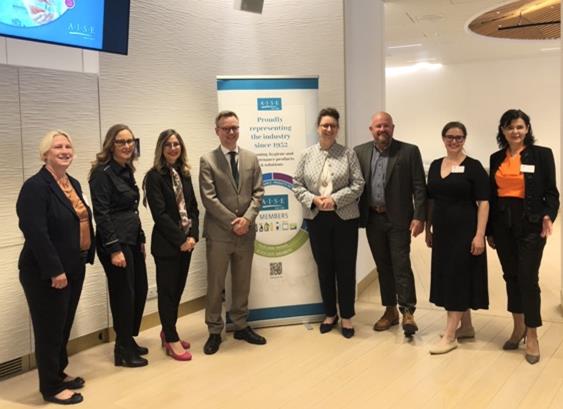
Nicole Vaini assumed the role of the facilitator and welcomed the attendees, introducing the co-hosts and inviting them to deliver their opening remarks. The central question posed by Ms Vaini consisted of questioning the means by which society might ensure the continued prevention of the spread of infections in the absence of ethanol. She also indicated that this question constituted the fundamental issue under consideration in the upcoming discussion. Ms Vaini expressed her gratitude to the host and co-host for allowing an open and constructive exchange on a topic of great relevance to European citizens and the competitiveness of the European economy. Thereafter, an invitation was extended to the Members of the European Parliament (MEPs) in order for them to deliver their speeches, namely Christine Singer and Andreas Glück, in their roles of hosts and co-hosts, respectively.
Christine Singer MEP opened her remarks by expressing her appreciation for the participants’ attendance and willingness to engage in a fact-based, constructive discussion on the role and future of ethanol and detergents in cleaning. She offered special thanks to A.I.S.E. for its support, and in particular to Mr Bernd Glassl from IKW (the German Cosmetic, Toiletry, Perfumery and Detergent Association) for initiating the discussion through a written question to the EU institutions. MEP Singer commended his dedication, especially amid the ongoing debates surrounding the EU chemicals policy, product safety and sustainability. She also observed that, whilst abstract principles are often discussed, there is sometimes insufficient attention to the tangible impacts of policy actions on production, consumption and value chains.
She then affirmed that a blanket ban on ethanol and detergents in cleaning products would be scientifically unfounded and economically harmful, not only to manufacturers, but also to the EU. Ethanol, she asserted, is indeed a long-established, safe and effective component in several everyday hygiene products. She also highlighted its function as a solvent and preservative that enhances formulation stability and biodegradability, qualities that deserve recognition within an environmentally responsible regulatory framework, she added.
MEP Singer subsequently emphasised the need for regulation grounded in reliability and argued that companies investing in research, quality and sustainability require policy consistency rather than erratic political shifts. Moreover, she stated, EU citizens must rely on products that are safe, effective and affordable. Another fundamental question posed by Ms Singer MEP is how Europe can develop a balanced chemicals policy that protects EU health and the environment, whilst promoting innovation and economic resilience.
Additionally, she warned against scapegoating ethanol with an overly precautionary approach, especially in the absence of a comprehensive scientific assessment. Concluding her remarks, she highlighted the need to examine the political implications for the EU industry, the expectations of manufacturers and associations, as well as the European Parliament’s role in crafting pragmatic and effective solutions. She reaffirmed her commitment to a policy guided by technical reasoning and regional value creation and called for decision-making based on sound judgment, transparency and inclusive participation.
Andreas Glück MEP also welcomed the event participants, highlighting that he was speaking as both a Member of the European Parliament and a medical doctor. He emphasised his continued engagement with clinical practice in his hometown hospital, which ensures he remains directly connected to patient care. In this connection, he acknowledged the frequent use of ethanol-based disinfectants, both in medical settings and in everyday life, and remarked that one of the few positive legacies of the COVID-19 crisis is citizens’ increased familiarity with hand disinfection, which many previously viewed as uncommon.
He subsequently stressed that ethanol-based hand rubs (EBHRs) are the most commonly used disinfectants during the pandemic and described them as fast-acting, widely available and highly effective, including against enveloped viruses such as the norovirus. He asserted that EBHRs are indispensable to hospital infection control, and that a functioning healthcare system without them is inconceivable.
However, he also warned that ethanol is currently under review by the European Union for potential classification as a carcinogenic, mutagenic or toxic to reproduction (CMR) substance. In fact, he stated, the European Chemicals Agency is considering classification under categories 1A, 1B or 2 for reproductive or carcinogenic toxicity. Against this backdrop, he cautioned that such a designation would have serious consequences, as viable alternatives are not universally available, and remarked that established and effective hospital hygiene protocols could be undermined.
MEP Glück explained that a CMR classification would entail significant legal and regulatory implications. Pregnant or breastfeeding healthcare workers would be barred from using ethanol-based products, worsening existing staff shortages, he said. Minors might also face restrictions on using hand disinfectants, and public access to ethanol-based sanitisers in hospital dispensers could be prohibited, he added. Furthermore, this possible classification would necessitate substitution and reformulation of numerous products, impose new documentation requirements and limit availability for critical user groups, disrupting effective hygiene procedures, he specified.
The speaker also argued that, from both toxicological and environmental perspectives, ethanol is preferable to many alternatives for its lower toxicity. In addition, it can be produced from renewable sources, supporting EU climate goals by reducing fossil fuel dependency. He subsequently criticised the scientific basis for the proposed classification, asserting that it stems from studies on oral ethanol consumption, but not on its use as disinfectant. These assessments, he noted, are based on limited cases of misuse and do not justify classifying ethanol as a CMR when appropriately used for hand disinfection.
In conclusion, MEP Glück asserted that ethanol is safe under its intended usage and essential for infection prevention and healthcare hygiene. A CMR classification, he reiterated, would harm patient safety rather than enhancing it, and the resulting costs would outweigh any purported benefit. He firmly rejected the rationale for classification, describing it as unfounded and based on misuse. Eventually, MEP Glück urged fellow policymakers to ensure ethanol remains accessible to safeguard public health, patients, and healthcare professionals throughout Europe by emphasising that, rather than restricting access to effective disinfectants such as ethanol, policies should support individual responsibility and informed decision-making in healthcare and daily hygiene.
Speaking on behalf of A.I.S.E., Alexis Van Maercke opened the discussions by presenting a short video to introduce the association’s perspective. He explained that A.I.S.E., headquartered in Brussels since 1952, operates as an EU-wide network comprising 30 national associations, 19 corporate members, and 19 value chain partners, collectively representing approximately 900 companies, including several SMEs.
He emphasised that the industry’s mission is to ensure the continued availability of essential products that support hygiene and public health, not only in domestic and hospital environments, but also in other domains such as food and beverages. He also welcomed the opportunity to engage in a meaningful discussion on ethanol’s essential role in society.
Mr Van Maercke highlighted ethanol’s natural and versatile properties, including its use in disinfectants and insect repellents, whose importance is growing amid rising temperatures and climate change, particularly in southern Europe. The emergence of new mosquito species and other pests underscores the need for effective repellents, many of which rely on ethanol, the speaker specified.
He subsequently acknowledged that no viable alternatives to ethanol currently exist. Whilst awaiting the results of an alternatives analysis, particularly given numerous submissions from the United States, he affirmed that ethanol’s efficacy and controllability remain unmatched.
The speaker also warned that banning ethanol would harm both human health and the economy and would go against the EU’s competitiveness agenda. Additionally, such a ban would impose significant bureaucratic and financial burdens on companies and regulatory bodies alike, he stated. This, he argued, is not the time for added regulatory complexity.
Alexis Van Maercke also questioned the evidence underpinning the current concerns, noting that it derives from cases of abusive ethanol ingestion rather than its intended use, and concluded by reaffirming the shared goal among all stakeholders, namely preventing the spread of infections.
Subsequently, Nicole Vaini announced the panel of experts who provided insights into ethanol’s antiseptic and disinfectant properties, the biocidal process and its broader implications. She then introduced Dr Alexandra Peters from the Institute of Global Health at the University of Geneva and the Clean Hospitals Initiative, followed by Dr Raffaella Perrone, Director of Unit 8, Biocide and Cosmetic at the Italian Ministry of Health, and Dr Vera Ritz, Head of the Unit for Control and Overall Assessment of Biocides at the German Institute for Risk Assessment (BfR). She then invited Dr Peters to take the floor.
Dr Alexandra Peters opened her speech by emphasising the importance of contextualising ethanol’s use in relation to its intended purpose. She highlighted healthcare-associated infections (HAIs) as a major global health issue which is causing more deaths annually than tuberculosis, malaria and HIV combined. Whilst calling this phenomenon a “silent pandemic“, she reported that approximately 500,000 individuals die each day from HAIs, and that the economic costs exceed 200 billion dollars.
She identified three main sources of HAIs, namely contaminated hands, contaminated environments and patients’ own bacteria. No hospital institution, she noted, has fully solved this problem. In Europe, 1 in 14 patients acquires an HAI during hospitalisation, whilst, in lower-resource settings, rates can reach one in two or three.
The speaker also stated that the two most effective strategies to reduce HAIs are hand and environmental hygiene. Hand hygiene using alcohol-based hand rubs (ABHRs) is the most studied and effective intervention, capable of halving infection and mortality rates, she emphasised. Whilst ethanol is also used in surface disinfectants, it is indispensable for hand hygiene, she added.
Dr Peters explained that traditional handwashing with soap and water has become impractical in modern healthcare settings. Alcohol-based handrubs are faster, taking just 15 to 20 seconds, and can be used bedside without water or towels, the speaker stated. Frequent handwashing, especially in high-intensity environments such as intensive care units (ICUs), is not feasible, she added.
The speaker subsequently recalled that in 2005, the WHO’s first Global Patient Safety Challenge made ABHRs a global priority. Today, 148 countries have committed to tackling HAIs, and ABHRs are on the WHO’s Essential Medicines List, underscoring their public health importance.
She also stressed that ethanol in handrubs is not absorbed into the bloodstream and poses no carcinogenic risk. Comparisons with ingested alcohol, she argued, are irrelevant to topical use. She noted that religious leaders in Islamic countries have issued fatwas permitting the use of ethanol. She also stated that alcohol-based handrubs are both lifesaving and cost-effective, with no evidence of bacteria developing resistance at the concentrations used in healthcare. Ethanol, she noted, is well tolerated by the skin, has a milder odour than most alternatives and is environmentally safer, being one of the few disinfectants not associated with respiratory harm from prolonged use.
Dr Peters warned that, if ethanol were classified as a carcinogen, it would no longer be used in handrubs. This would have catastrophic consequences, as ethanol is widely used worldwide for local handrub production, including during the COVID-19 pandemic, when manufacturers such as perfume and alcohol producers repurposed their facilities for its production, she remarked. Its affordability, availability and vital role in achieving the UN Sustainable Development Goals and universal healthcare access make it irreplaceable.
She concluded that alternative substances are either more toxic, less effective, or both. Reclassifying ethanol would set global infection control efforts back by decades. She urged that scientific literature guiding policy must reflect ethanol’s actual use in healthcare.
Dr Raffaella Perrone explained that her unit at the Italian Ministry of Health is responsible for the regulation of both cosmetics and biocides. Before presenting Italy’s position, Dr Perrone provided an overview of the regulatory framework for biocides by stating that the regulation consists of two main phases: first, the evaluation of the active substance, which primarily focuses on hazard assessment; and second, if the substance is approved, the evaluation of specific products for efficacy and risks to human health and the environment by the competent authorities. She noted that the event discussion would focus on the so-called “Group 1” under the current regulation, namely, disinfectants such as ethanol.
She also outlined the approval process for active substances, noting that ethanol is currently undergoing review. At present, she continued, the process is at the stage of public consultation, which was initiated by the European Commission. Italy and some other EU member states, as well as various stakeholders, have participated in this consultation, which aims to determine whether viable alternatives to ethanol exist.
Dr Perrone also described the exclusion criteria for the non-approval of active substances. These include classification as carcinogenic, mutagenic or toxic to reproduction (categories 1A or 1B), endocrine disruption, persistence, bioaccumulation and toxicity (PBT), or very persistent and very bioaccumulative (vPvB). She indicated that ethanol may meet one or more of these exclusion criteria.
She then characterised ethanol as having broad-spectrum, antimicrobial properties as it functions by disrupting cell membranes and denaturing proteins, leading to microbial death. Ethanol, she added, is highly effective against a wide range of pathogens, including bacteria, mycobacteria and fungi, as well as against both enveloped and non-enveloped viruses. Its widespread use during the COVID-19 pandemic was cited as strong evidence of its efficacy, particularly against coronaviruses.
Dr Perrone subsequently provided an update on the current regulatory status: in March 2024, Greece submitted a revised assessment report to the European Chemicals Agency (ECHA), proposing that ethanol be classified as a reproductive toxicant (category 2). However, the ECHA Working Group recommended a more severe classification, namely the CMR category 1. If this classification was adopted, ethanol would be banned from the EU market in the coming year, she specified.
She stated that Italy’s position is to await an official decision from the Risk Assessment Committee of the ECHA, which consists of a panel of experts which will give a more comprehensive and specialised evaluation. However, she added, a thorough risk-benefit assessment would also be essential. She also emphasised ethanol’s critical role across multiple sectors, particularly noting the following:
1. Its inclusion in WHO-recommended formulations during the COVID-19 pandemic, due to its demonstrated efficacy against a wide spectrum of viruses;
2. Its status as the only active substance with broad virucidal activity and a comparatively less hazardous toxicological profile;
3. Its lower risk to the skin or eyes compared to other alcohols;
4. Its role as a key solvent in pharmaceutical manufacturing;
5. Its use as a disinfectant in medical devices;
6. Its importance to the food, cosmetic and biocide industries;
7. Its low environmental impact;
8. Its affordability, making it economically valuable across industries.
In conclusion, Dr Perrone warned that classifying ethanol as a CMR category 1 substance could have significant regulatory consequences across a broad range of sectors, including medical devices, cosmetics, pharmaceuticals (both human and veterinary), consumer products, detergents and biocides.
Dr Vera Ritz, Head of the Unit for the Steering and Overall Assessment of Biocides at the German Federal Institute for Risk Assessment (BfR), delivered a presentation explaining the distinction between risk and hazard, using a metaphorical example involving a bear. She clarified that hazard refers to a substance’s intrinsic potential to cause harm, whereas risk denotes the likelihood and severity of harm occurring under specific conditions of use.
In the context of biocides, she noted that active substances are inherently toxic, as they are designed to control harmful organisms. However, she emphasised that these substances should not pose a health risk if properly assessed and approved under the EU Biocidal Products Regulation (BPR), provided they are used as intended and exposure remains within established safety thresholds.
Dr Ritz outlined the two key components of risk assessment:
1. Hazard (toxicity) assessment: it determines a no-observed-adverse-effect level (NOAEL), adjusted with uncertainty factors to establish a reference value. This step also includes classification (e.g. labelling a substance as carcinogenic);
2. Exposure assessment: it estimates uptake (e.g. via skin contact or inhalation) and compares exposure levels with the reference value to determine risk.
Under the BPR, approval depends on whether exposure remains below the reference threshold. In parallel, substances are classified under the CLP Regulation by the Risk Assessment Committee (RAC) at the European Chemicals Agency (ECHA), which is typically not involved in evaluating biocidal products.
Dr Ritz stressed that a full risk assessment is only conducted if the substance does not meet exclusion criteria, particularly for carcinogenicity, mutagenicity, reproductive toxicity (CMR Category 1) or endocrine disruption. If these hazards are confirmed, the evaluation stops at the hazard level and regulators consider possible exemptions (e.g., negligible risk, essential public health use or socio-economic justification).
She warned that, if ethanol was classified as CMR Category 1, exposure assessments would no longer apply. However, she noted that reference values, such as Germany’s occupational exposure limits based on the body’s natural ethanol production, could theoretically support a comparative risk assessment, although classification would still remain a regulatory barrier.
Comparing exposure routes, Dr Ritz explained that, while oral ingestion (e.g., drinking wine) results in near-total absorption, dermal absorption (e.g. from hand disinfectants) is negligible. Inhalation exposure, notably the primary concern for disinfectant use, is also limited due to ethanol’s rapid evaporation, she added. In this connection, she argued that a scientific risk assessment could reasonably conclude that ethanol in hand disinfectants poses no significant risk. Nevertheless, under a CMR classification, approval would exclude non-professional users, pregnant or breastfeeding women and public settings, precisely the groups for whom ethanol-based disinfectants are most essential, she remarked. Dr Ritz concluded by cautioning that ethanol is not the only disinfectant at risk as several others may face similar regulatory challenges in the near future.
Dr Andreea Capilna began her speech by asking how society could continue to prevent the spread of infections without ethanol, emphasising that working without it would now be inconceivable. She stated that hospital-acquired infections (HAIs) are a key issue for healthcare systems today. Referring to data from the World Health Organization (WHO), she reported that the incidence rate of HAIs ranges from 8% in Europe to 27% in Africa, meaning that up to one in three hospitalised patients may acquire such infections.
Referring to data from the European Centre for Disease Prevention and Control (ECDC), she noted that around 25% of hospitalised sepsis cases are linked to HAIs. Among these cases, half are severe, involving multi-organ failure and requiring intensive care, resulting in significant human and financial costs. Based on a modelling study covering 474 surveys across 99 countries, she stated that the global number of antibiotic-resistant HAIs is estimated at 136 million, which is an alarming figure. She warned that multidrug-resistant bacteria pose a serious threat, citing reports indicating that Acinetobacter baumannii is resistant to all antibiotics in 82% of the cases.
Dr Capilna added that, according to ECDC data, the burden of the six most frequent HAIs in the EU/EEA, measured in disability-adjusted life years (DALYs), is double that of 32 other infectious diseases. These infections account for over 90,000 deaths and approximately 2.5 million DALYs annually. DALYs, she explained, reflect both premature mortality and years lived with disability caused by these infections, she remarked. She also referenced a joint OECD and WHO study estimating that, by 2050, HAIs could be responsible for 3.5 million global deaths annually.
In terms of prevention strategies, Dr Capilna identified hand hygiene using alcohol-based hand rubs as the most effective method, capable of halving both infection and mortality rates. The second strategy, environmental hygiene, also involves the use of ethanol-based disinfectants. Ethanol, she noted, is thus essential in both primary stages of HAI prevention and is supported by numerous studies.
She recalled that the importance of hand hygiene dates back to 1847, when Ignaz Semmelweis introduced mandatory handwashing among medical staff, resulting in a dramatic decline in HAIs and maternal and neonatal mortality. The speaker also acknowledged that hand hygiene remains a challenge in 2025 and was particularly critical during the COVID-19 pandemic. During this period, both soap-and-water handwashing and hydroalcoholic hand rubbing were widely employed, she added. She also noted that the latter method offers advantages such as time efficiency, broad availability, and improved skin tolerance.
Dr Capilna subsequently pointed out that handwashing with soap and water faces practical limitations, including space and time constraints at the point of care. She cited research indicating that, when hand hygiene opportunities exceed ten per hour, compliance among healthcare workers declines. She also highlighted that in many regions, basic water, sanitation and hygiene infrastructure is either limited or entirely absent.
She therefore emphasised the significance of hydroalcoholic hand rubs as an alternative. She credited Dr Didier Pittet of Geneva as the originator and global advocate of this approach, which gained universal relevance during the pandemic. When shortages of hand rubs occurred, many hospitals and regions were able to produce their own, thereby safeguarding patients, healthcare workers, and public health. The availability of hydroalcoholic solutions at the point of care, she said, transformed infection control practices by improving access and compliance, with substantial benefits for patients.
Dr Capilna stressed that this approach supports both healthcare workers and patients and is globally recommended. She outlined several key advantages of ethanol-based hydroalcoholic solutions:
1. Rapid application, essential in light of staff shortages and communication barriers;
2. Ready-to-use format, requiring no water, sinks, soap or towels;
3. Immediate availability at the point of care, enhancing compliance and efficacy;
4. Simple usage, reducing hand hygiene time by up to 75%, thereby improving outcomes;
5. Sustainable and biodegradable, with local production feasible worldwide;
6. Lower incidence of skin dermatitis compared to soap and water;
7. Listed as an essential medicine by the WHO;
8. No bacterial resistance observed at concentrations used in healthcare facilities;
9. Safe for healthcare workers, patients, and visitors, and also used in the community.
She clarified that ethanol is not ingested, but applied topically for disinfection purposes, and asserted that its use in hand hygiene represents one of the best healthcare investments, with studies showing that each dollar spent can yield a return of up to $4.60, saving lives, reducing costs and minimising waste, while the return of investment is higher, namely around $27.
In conclusion, Dr Capilna reaffirmed that hand hygiene saves lives. With 16 million HAIs occurring globally every year and up to 75% linked to inadequate hand hygiene, she estimated that proper hygiene could prevent approximately 12 million infections annually. Of the two available methods, i.e. handwashing and hand rubbing, she highlighted the importance of the latter for its speed, higher efficiency, better compliance, sustainability and accessibility. She also stated that ethanol remains the most available option during outbreaks and pandemics and does not exhibit CMR effects when used externally. She concluded by stating that, within the medical community, no better alternative to ethanol-based hand hygiene currently exists.
Nicole Vaini thanked the speakers and opened the floor to the attendees for the Q&A session.
An institutional member of the audience stated that, although he did not disagree with the views expressed, he observed that the discussion had become somewhat of an echo chamber, with speakers largely reiterating similar points. He remarked that the role of politicians is to consider both sides of an argument and expressed a desire to understand the opposing perspectives on the subject.
Another attendee clarified that the discussion on ethanol did not pertain to oral consumption but rather to dermal contact and chemical labelling. He criticised the current regulatory approach, arguing that it relied on an inappropriate dataset and testing methodology. Additionally, he questioned why equivalent testing standards, using the same dosages, had not been applied to ethanol alternatives like isopropanol. In his view, ethanol is being wrongly assessed as a consumable substance rather than in the context of topical application.
The attendee also raised concerns about ethanol alternatives, noting that products such as isopropanol are produced by only a handful of global manufacturers. These producers, he pointed out, often invoke force majeure clauses, resulting in supply shortages and steep price volatility. In contrast, he emphasised that ethanol is widely produced, readily available, safe, renewable and a critical component of the EU’s healthcare system, chemical industry and the broader industrial infrastructure. He eventually underscored the importance of safeguarding its continued use.
A further member of the audience acknowledged that, whilst the European Union rightly maintains certain regulatory mechanisms, these frameworks can become overly rigid in practice. In the case of a unique and essential substance such as ethanol, she argued, the current system risks devolving into a box-ticking exercise, generating unintended consequences.
She urged policymakers to consider whether such outcomes are acceptable, insisting that, from the perspective of the EU citizens, the answer is negative. The real issue, she emphasised, was not active opposition to ethanol, but rather regulatory oversights leading to unintended collateral effects.
The attendee called for legislation that works effectively in practice, stressing that the current situation presents an opportunity, within the broader goal of boosting EU competitiveness, to develop a more sustainable and forward-looking regulatory approach. Such reform, she contended, would prevent similar mistakes from being repeated with other chemical substances in the future.
Andreas Glück MEP underscored that policymakers must carefully weigh both the benefits and the drawbacks of an issue before making decisions. He challenged the rationale behind classifying ethanol as a CMR (Carcinogenic, Mutagenic or Reprotoxic) substance and drew attention to what he saw as a critical divide between hazard-based and risk-based regulatory frameworks.
He also explained that a hazard-based approach evaluates only the intrinsic dangers of a substance, potentially resulting in prohibitions due to its theoretical risks. A risk-based approach, however, examines the substance’s real-world usage, including exposure levels and conditions of use. Mr Glück MEP stressed that regulators must consider the merits of both methodologies to ensure balanced and evidence-based decision-making.
Dr Raffaella Perrone stated that the issue extended beyond the distinction between hazard and risk, noting that the current dossier was primarily based on oral exposure data rather than data related to skin or eye contact. She explained that the European Commission had nonetheless deemed this sufficient to proceed with the classification of the active ingredient. However, she remarked, the competent evaluating Greek authority did not fully agree with this approach. She also noted that Italy, France and Germany are opposed to the new classification and called upon the European Commission to consider postponing any decision until harmonised criteria are developed. She concluded by expressing hope that the Risk Assessment Committee will provide a more accurate classification and reiterated her negative opinion on proceeding with a premature classification that may ultimately prove incorrect.
Dr Alexandra Peters stated that any comparison between ethanol and its alternatives must be conducted using the same criteria and that, under such conditions, the alternatives would be unviable from the outset.
An attendee expressed his concern that ethanol currently requires an advocate, warning that its ban would impact on a wide range of applications. He emphasised that, in the context of crisis preparedness and efforts to reshore pharmaceutical production to Europe, such production would not return under the present circumstances. The attendee added that some companies were even considering relocating outside Europe, posing a serious risk to both the industry and the continent.
A different attendee asked for the speakers’ views on the potential applications beyond hand rub hygiene at the immediate point of care, specifically regarding products related to the environment. She noted that such products, despite not being potentially covered by the Biocidal Products Regulation (BPR), would fall under the broader scope of the Sustainable Product Regulation (SPR).
Dr Alexandra Peters explained that, in environmental hygiene within healthcare, ethanol is generally not used alone if alternatives are available, due to its rapid evaporation and difficulty in controlling both the amount on surfaces and contact time. She also noted that ethanol is often combined with other chemicals and, whilst being widely used for certain environmental hygiene applications, she would not claim it is completely irreplaceable. However, beyond healthcare, ethanol has many broad applications as a pure substance, she added.
Another member of the audience stated that, in the food and beverage sector, ethanol is particularly used for certain products such as chocolate as it is necessary to keep pathogens and water out of the facility. She noted that cleaning without water is very difficult unless ethanol is used. She also highlighted infant formula as another example, emphasising that ethanol and alcohols in general are essential for cleaning, sanitising and disinfecting stainless steel equipment.
Another attendee asked the speakers what the consequences would be if ethanol was not readily available in the event of another pandemic.
Dr Andreea Capilna stated that no alternatives could be envisaged that are as easily and widely available, as easily produced, or as highly effective against bacteria causing HAIs or other infections.
Dr Alexandra Peters explained that during the pandemic, when alcohol-based handrub was scarce and hospitals were not being restocked with isopropanol or npropanol, supplies were maintained by various industries which were able to adapt, including alcohol producers for drinking, perfumeries and pharmaceutical companies using fermentation equipment to produce ethanol. She added that she was unaware of any country worldwide that faced issues accessing alcohol-based handrub during the pandemic that were resolved by anything other than ethanol.
An attendee who intervened before warned that, if such a classification was adopted, the availability of ethanol would be significantly reduced.
A further attendee expressed hope that the abovementioned classification would not be applied to ethanol, arguing that the key question is what benefit it would bring, and stated that, having discussed numerous problems that would arise, there would be no benefit.
Another attendee that spoke before stated that, during the pandemic, the main global ethanol producers (i.e. Brazil and the US), as well as other countries exporting to Europe, banned exports to retain their ethanol supplies. He warned that, in the next pandemic, ethanol would be used universally and immediately, regardless of any regulations EU institutions might put forward. He emphasised the importance of maintaining a European ethanol industry capable of responding to such a crisis.
A further attendee observed that this is not necessarily a unique situation, noting that Dr Ritz identified other substances that could be affected similarly. She questioned whether such cases should be addressed on an individual basis with exemptions or derogations, or whether the regulatory process in Europe should be reconsidered more broadly. Acknowledging that regulatory changes take time, she highlighted the current momentum for change driven by the competitiveness agenda, omnibus regulations and simplification efforts, and asked if there might be a better way to design and operate regulatory processes to avoid the continual need for individual exemptions.
Dr Vera Ritz stated that case-by-case decisions are very problematic and expressed a strong preference for a better regulatory framework for essential substances, particularly in main group one, as well as for insecticides and rodenticides facing similar issues. She highlighted that, given the challenges posed by climate change and the potential need for additional or alternative biocides in the future, a re-fit process for the Biocidal Products Regulation (BPR) would be a worthwhile consideration.
Nicole Vaini concluded by expressing her gratitude to the hosting MEPs, the experts, and the participants. She acknowledged that, while the European Parliament does not have a formal role in regulatory processes, they would strongly welcome a motion for resolution, viewing it as a valuable step to raise the profile of the debate on ethanol. She emphasised that authorities should recognise the critical role of ethanol, highlighting its importance for EU competitiveness and the risks posed by a potential ban, especially in the event of another pandemic. Before any classification is undertaken, she recommended that the European Commission conduct a socio-economic assessment. She stressed that public health is non-negotiable and must not be compromised regarding ethanol.
In her closing remarks, Christine Singer MEP summarised the key points of the discussion, stating that ethanol is a proven, safe and effective component of many modern products, including cleaning and detergents. She stressed the need to assess ethanol factually and fairly, warning against blanket bans. Instead, she advocated for a differentiated approach considering use cases, concentrations and actual risks based on sound science rather than unfounded assumptions. Emphasising reliability for businesses and consumers, she noted that investors require certainty while users demand safety, effectiveness, and affordability.
She also pointed out that the re-evaluation of ethanol must be conducted with utmost care, transparency, rigour, and dialogue with stakeholders. Political conclusions should follow only once a solid scientific basis is established. The speaker subsequently cautioned against compromising environmental and health goals for economic stability and innovation, urging balanced policymaking grounded in common sense and risk assessment. She eventually reiterated that herself, along with other MEPs, will continue to closely monitor the issue and advocate for the European Commission to consider scientific facts, economic realities and practical experiences of producers and users in its decision-making process.